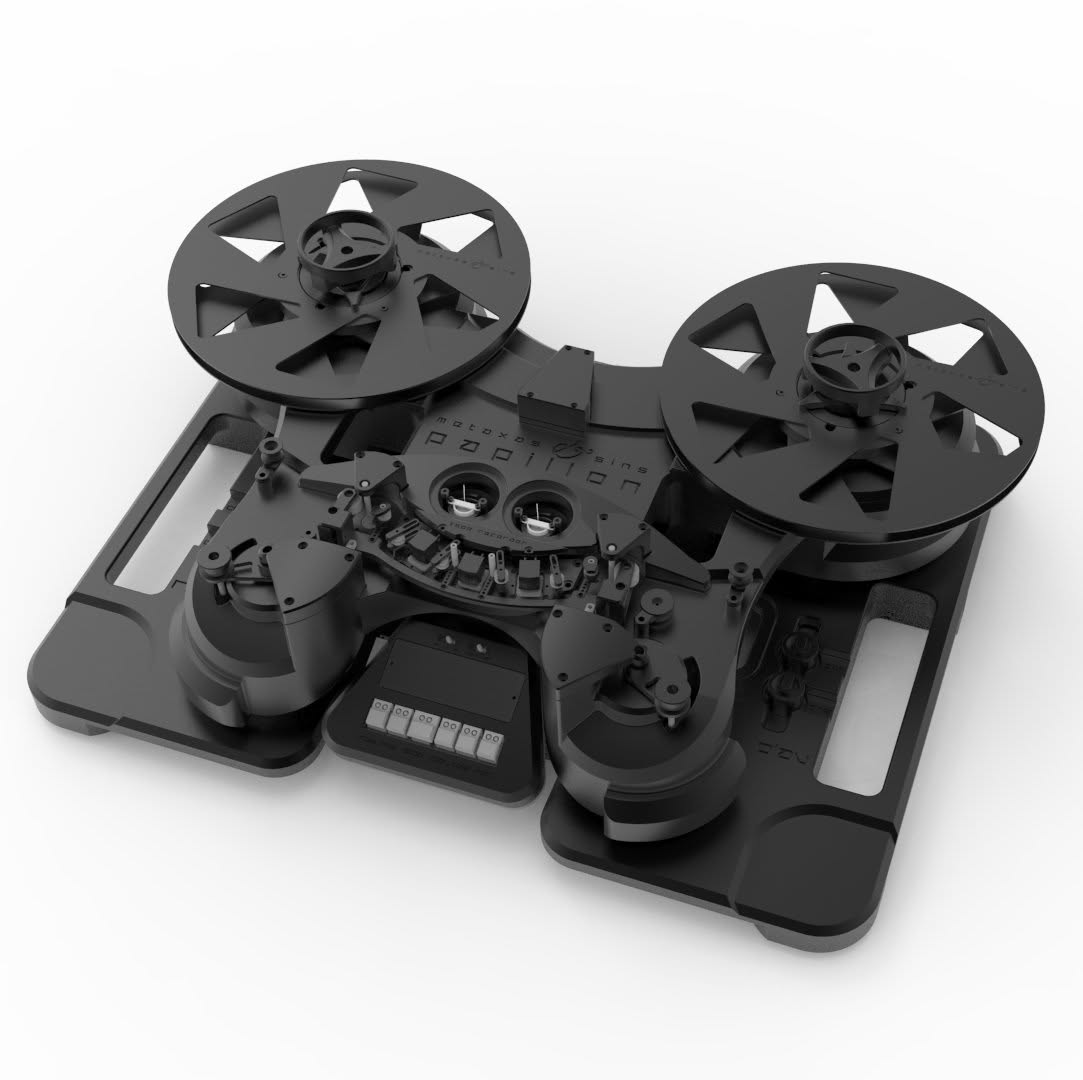
From a first pair of reels to a reference-grade 15 ips listening system, each item includes practical selection advice and the details that matter before you buy.
01Essential
Empty Reels
Choose the reel size the recorder supports: 5-inch, 7-inch and 10.5-inch are common, while some equipment accepts other formats. For 15 ips operation, a 10.5-inch reel is common on machines designed for it. Aluminium reels are rigid and visually refined; high-quality plastic reels are lighter and economical. Inspect reel flatness, flange spacing and balance before use.
Common sizes: 5 in • 7 in • 10 in • 10.5 in
02Essential
NAB Hub Adapters
NAB-hub reels require compatible adapters on machines with Cine-type spindle mounts. Prioritise accurate centring, positive retention, non-marking surfaces and reel-specific fit. Some machines have native NAB hubs; never assume an adapter is needed.
Compatibility • Concentricity • Locking
03Essential
Reel Clamps
Use only the manufacturer-specified reel-retention system. Correctly fitted clamps keep reels secure during playback and winding without bending flanges or stressing hubs.
Correct fit • No slippage
04Essential
Reel Spacers
Spacers may be needed for reel-to-guide alignment on specific transport/reel combinations; install only the thickness approved for the machine. Incorrect shimming can cause flange rubbing or tape-edge damage.
Alignment • Correct thickness
05Tape preparation
Leader Tape
Non-magnetic leader offers a safer threading section, protects programme material and supports identification. Common colours include white, red, blue, yellow, green and clear. Use archival-quality leader of the correct width.
White • Red • Blue • Yellow • Green • Clear
06Tape preparation
Splicing Tape
Use dedicated low-residue audio splicing tape in the correct width and apply it to the non-oxide side as appropriate. Do not use office adhesive tape or self-made glue repairs. Old adhesive may migrate and contaminate the tape path.
Low-residue • Correct width
07Tape preparation
Splicing Block
A precision splicing block supports repeatable straight or angled cuts. Angled joins can reduce abrupt transitions, but follow the recording/editorial requirement and use a compatible splicing system.
Straight • Angled
08Tape preparation
Non-Magnetic Editing Blade
Use a clean, sharp blade suitable for your splicing block. Handle it safely and never cut tape against the recorder or against an unprotected work surface.
Clean blade • Safe handling
09Preservation
Tape Storage Boxes
Use structurally sound, clean boxes that support the reel and keep out dust. Acid-free or inert archival materials are preferable for long-term collections. Store boxed reels upright in a stable, cool and dry environment.
Upright • Protective • Archival quality
10Essential
Professional Recording Tape
Select a formulation suited to your machine and the required bias, equalisation, operating level and tape speed. Frequently used RTM formulations include SM900, SM911, LPR35 and LPR90. Recalibration may be required when changing formulation.
SM900 • SM911 • LPR35 • LPR90
11Maintenance
Tape-Path Cleaning Supplies
Use lint-free swabs and a suitable head/metal-path cleaner only as the recorder manufacturer permits. High-purity isopropyl alcohol is often used on compatible metal components, but can damage some plastics, finishes and rubber. Never clean a moving tape path.
Heads • Guides • Capstan
12Maintenance
Head Demagnetiser
Demagnetising should be undertaken only when warranted, with the equipment switched off and recorded media kept away. Follow the exact procedure for the demagnetiser and deck; incorrect technique can magnetise parts or affect recordings.
Specialist handling advised
13Maintenance
Tape-Head Inspection Tools
Use an inspection loupe and controlled light to identify grooves, uneven wear, deposits, pitting or physical damage. Head relapping and magnetic-gap assessment are specialist jobs; do not polish heads using domestic abrasives.
Loupe • Lighting • Head wear
14Calibration
Calibration Tapes
Certified reference tapes support playback level, azimuth and frequency-response checks. Confirm speed, equalisation (NAB or IEC/CCIR), track format, tape width and reference fluxivity before purchasing. Protect calibration tapes and verify provenance.
Speed • EQ • Tracks • Reference fluxivity
15Calibration
Tape Tension Gauge
A technician uses suitable gauges and service documentation to verify transport tension in play, fast wind and other modes. Correct values are machine-specific and affect tape wear, guiding and stability.
Service-manual values
16Calibration
Digital Tachometer
A tachometer can check motor or rotating-part speed where a known reference applies; a calibrated test tape and wow/flutter instruments are more appropriate for direct tape-speed assessment.
Rotating speed is not always tape speed
17Calibration
Wow & Flutter Test Equipment
A dedicated test instrument and calibrated test tape reveal short-term speed instability, which may stem from capstan, bearing, drive, belt or pinch-roller faults.
Transport stability
18Transport parts
Pinch Rollers
Replacement pinch rollers must match diameter, width, shaft fit, rubber properties and machine geometry. Hardened or glazed rollers can cause slip or unstable speed. Avoid unapproved cleaning chemicals.
Diameter • Hardness • Grip
19Transport parts
Reel Table & Hub Parts
Brake pads, hubs, springs, bearings and reel tables are safety-critical transport components. Source original or accurately specified replacements and check service-manual procedures before fitting.
OEM-compatible precision
20Protection
Dust Covers
A fitted dust cover or breathable fabric cover limits airborne contamination when the machine is off and cool. Keep ventilation clear during operation and never trap heat around an active recorder.
Ventilation • Clearance
21Protection
Machine Stands & Racks
Use sturdy stands or racks rated for machine mass and operating orientation. Provide stable support, cable clearance, ventilation and access for servicing.
Load capacity • Airflow
22System integration
Headphone Amplifiers & Preamps
Match outputs and inputs for level, impedance, grounding and connector format. Some replay-only machines need an appropriate playback electronics chain; distinguish tape EQ from line-level signal amplification.
Level • Grounding • Correct signal chain
23System integration
Interconnect Cables
Choose properly terminated RCA, XLR or DIN cables as required. Balanced and unbalanced connections should be wired correctly, not just matched mechanically. Avoid needless cable length and strain.
RCA • XLR • DIN
24System integration
XLR-to-RCA Adapters
An adapter does not automatically solve balanced/unbalanced wiring or pro/consumer level differences. Check the deck output topology and preamp input requirements; use active interfacing where necessary.
Wiring • Signal level
25Cataloguing
Reel Labels
Label each reel and box with artist, title, reel number, tape type, speed, equalisation, track format, date, and condition notes. Keep adhesive labels away from the tape pack and avoid marking original archival boxes irreversibly.
Title • Speed • Format • Date
26Cataloguing
Tape Library Catalogue
A searchable collection record makes it easier to manage provenance, storage location, condition, playback history, repairs, and transfers. Keep a backed-up digital copy.
Provenance • Condition • Location
27Protection
Reel Carrying Cases
Choose a rigid, correctly padded case that prevents reel movement and protects against impact and moisture. Acclimatise tape to the playback room after transport.
Rigid fit • Impact protection
28System integration
Tape Counters
Mechanical or digital position counters help locate passages, but many are not absolute time references. Save reel direction, speed and counter convention with your notes.
Location reference
29System integration
Remote Controls
Use only remotes designed for the deck and connector pinout. Transport, cue and record-enable functions differ substantially between models; never assume compatibility.
Deck-specific protocol
30Luxury finishing
Custom Reels & Display Accessories
Precision-machined aluminium reels, anodised finishes, engraving and stands can complete a premium installation. Mechanical balance, dimensional accuracy and safe retention must always take precedence over appearance.
Aesthetics must never compromise transport